

Refugee Families Are Living in Fear
When The Promise Of Welcome Turns Into Fear
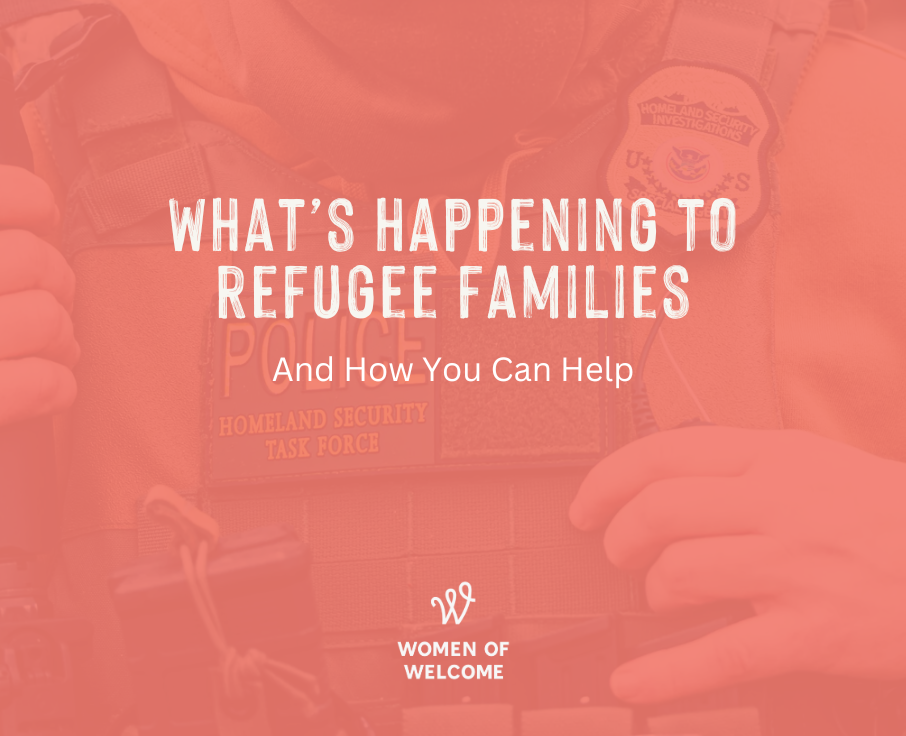
Over the weekend, dozens of lawfully present refugee families in Minnesota, many of whom fled war, violence, and religious persecution, were deceitfully lured from their homes by immigration agents. They were told lies. They were detained. And in many cases, they were sent to out-of-state holding centers. This included children.
These are not individuals trying to bypass the system. These are families who followed the rules, waited patiently, and applied for protection through the most rigorous vetting process in the world through the U.S. Refugee Admissions Program.
They are here legally. They were promised safety. And now their lives are being torn apart under the newly launched Operation PARRIS—a federal effort that has already harmed dozens and threatens thousands more.
We are afraid this is only the beginning. Over 17,000 refugees across the U.S. are potentially at risk.
“This is a five-alarm fire. These are innocent children and families who fled the worst wars and persecution imaginable, who were invited by the American people to become Americans under the terms of American law.”
— Myal Greene, President & CEO of World Relief
Let that sink in. And then let’s do something about it.
(For more context on this situation, read this statement from World Relief and watch these posts from Matthew Soerens (here and here).
Why This Hits So Hard
Let’s be clear: These families did not break the law. They didn’t miss a deadline or fail to follow instructions.
They came through a legal refugee process, were granted admission by the U.S. government, and were in the process of applying for their Green Cards, as they are legally allowed to do after one year in the U.S.
But in November, a policy shift quietly halted those Green Card applications and required thousands of refugees, who are already vetted and settled, to re-prove their persecution all over again. No warning. No clear guidance. And now, no protection.
The chaos and fear from these detentions is spreading like wildfire:
Children don’t know if their parents will come home.
Refugee parents are too afraid to leave the house—even for work or school.
Families are at risk of homelessness as incomes disappear overnight.
This is not enforcement that protects. This is enforcement that traumatizes.
What Does Faithfulness Look Like Here?
At Women of Welcome, we’re rooted in the truth that biblical hospitality means welcoming the stranger with both compassion and conviction. This is not about politics. It’s about people.
The Bible reminds us:
“Do not mistreat or oppress a foreigner, for you were foreigners in Egypt.” – Exodus 22:21
“Let us not love with words or speech but with actions and in truth.” – 1 John 3:18
Our neighbors, our brothers and sisters in Christ, need our action, not just our sympathy.
So What Can You Do?
You can help. Right now. Below are three tangible steps you can take to respond with Christ-like courage.
Watch this video for even more context and action items (like how you can help your immigrant and refugee neighbors know their rights and how to plan if enforcement shows up at their door. Here’s a wonderful resource from World Relief for this!)
This vital conversation is between Women of Welcome Director Bri Stensrud and World Relief Vice President of Advocacy, Matthew Soerens, on January 16, 2026, to help us understand what is happening and how we can help!
1. Sign the Letter
Add your name to a national statement urging the federal government to:
Immediately halt Operation PARRIS
Release lawfully present refugees being detained
Stop retraumatizing families who have already proven their need for refuge
2. Pray
This is not just political. This is deeply spiritual. These families are facing fear, loss, and uncertainty. You can intercede for them.
Here’s a prayer you can use:
Lord, you are near to the brokenhearted. Be near to refugees in our nation now.
Protect every person, every parent, and every child. Guide advocates and leaders as they stand with this vulnerable community.
Give your Church the courage to rise in love. May justice roll on like a river. Amen.
3. Give
Our friends at World Relief are providing:
Urgent legal aid to protect due process
Rent and food assistance for families who’ve lost their income
Trauma-informed support and local church volunteers to walk with families in crisis
If you’re wondering how to help in a practical way—this is it.
Give now →
You Are Not Alone—And You Are Needed
Throughout history, the Church has either remained silent during moments like this or led the charge to defend the vulnerable.
When Japanese-Americans were interned, most churches said nothing.
When Jewish families were turned away before the Holocaust, we were silent again.
But when Southeast Asian refugees fled persecution in the ‘70s and ‘80s, the Church showed up.
We’re at a crossroads again. Will we remain silent, or will we stand with the persecuted?
The persecuted Church is not just “over there.” It’s here. And it’s being detained, divided, and deported—right now.
Will you share this with:
Your pastor
Your small group
That one friend who does care but doesn’t know what to say
We don’t all have to do everything. But all of us can do something.
Let’s speak up. Let’s act. Let’s be the people of welcome we’re called to be.
